
The work.
Every project starts with a specific challenge in a specific context. Here's what that has looked like.
Cultural & Heritage Commission, Central NJ
-
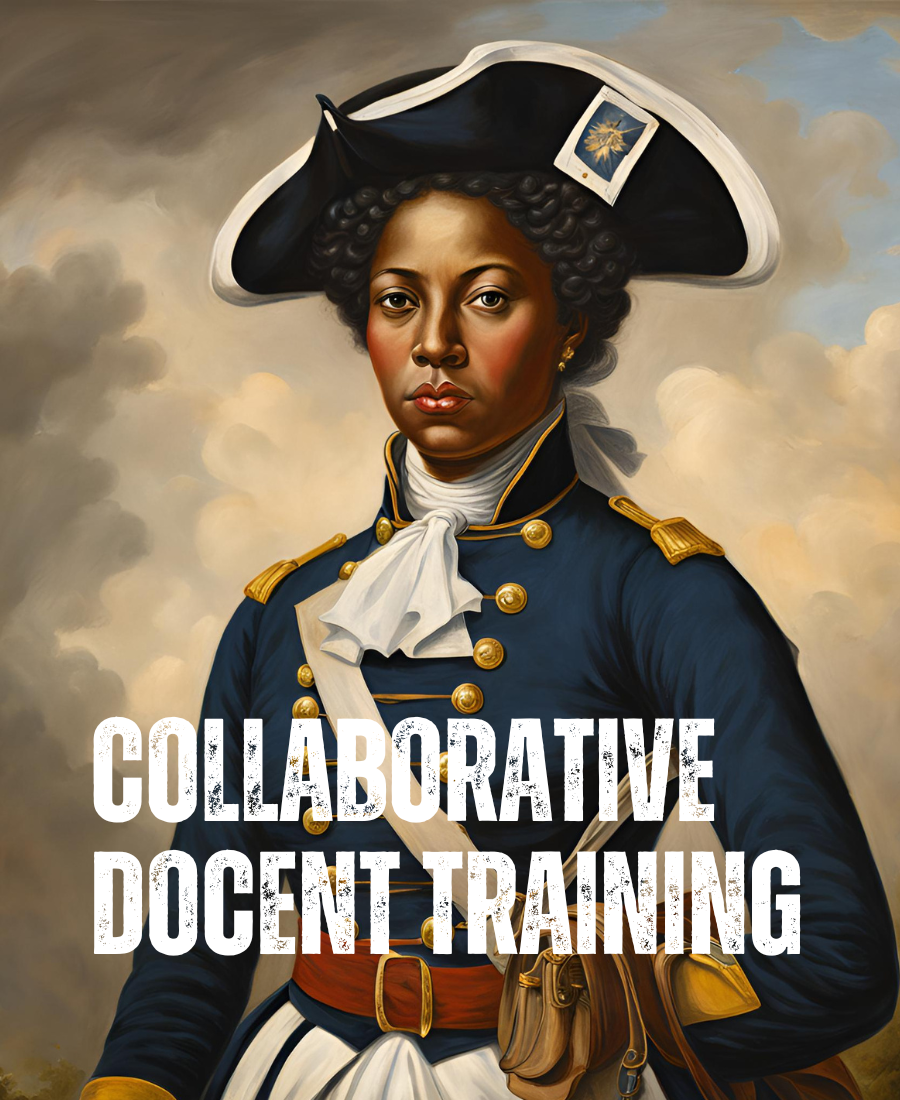
As America approaches its 250th anniversary, local historic sites have a rare opportunity - and a real responsibility - to tell a fuller, more inclusive story of the past. A countywide Cultural & Heritage Commission needed a way to recruit, train, and place volunteer docents across multiple historic sites, given the limited shared infrastructure to make that possible.
-
Working alongside an advisory committee drawn from partner sites, we developed a collaborative training framework from the ground up - program outcomes, recruitment strategies, training methods, evaluation tools, and a portfolio of multimedia resources that sites could share and adapt. The six-month program draws on the collective strengths of all partner sites to prepare each cohort before placement.
-
The county now has the first collaborative docent training program of its kind in New Jersey - and one of only a handful in the country. A community of trained, passionate docents is carrying local history forward into the Semiquincentennial.
Program Design · Curriculum & Learning
Private Clinical Practice, New York, NY
Organizational Systems & Tools · Curriculum & Learning
-
Remote psychotherapy expanded access to mental health care - but it also created new challenges for the therapists doing the work. A private practice serving New Yorkers needed tools to support provisionally licensed psychotherapists across their full professional journey: recruitment, onboarding, clinical development, and advancement.
-
Working alongside organizational leaders, we developed a strategic learning plan and a blueprint for belonging and inclusion outlining competencies and development opportunities for remote therapists. We then co-designed more than a dozen tools - customized to the developmental, occupational, and holistic needs of provisional clinicians - that strengthened the practice's infrastructure from the inside out.
-
The practice now has a sustainable, adaptable system for attracting, developing, and retaining therapists who can provide optimal client care - and a culture of learning that leaders and clinicians helped build together.
Mental Health Non Profit, Kingston, NY
-
Authentic community doesn't happen by accident - it requires intentional design. A New York-based mental health nonprofit wanted to investigate what genuine relational community looks like across disciplines, and needed a fellowship structure that could produce both original scholarship and practical tools for the field.
-
We developed a collaborative fellowship framework that brought together emerging scholars from fields including educational psychology, sociology, design, theology, and public health. The curriculum combined theoretical exploration with hands-on research, peer collaboration, cogenerative dialogue, and a capstone project - all designed to produce knowledge that practitioners could actually use.
-
Fellows emerged with scholarly expertise and practical frameworks for fostering authentic connection - contributions that extended into academia, nonprofit leadership, and community organizing. The fellowship produced a growing body of knowledge about what makes communities genuinely thrive.
Program Design · Curriculum & Learning
Private Clinical Practice, Metropolitan NYC
-
Many clients enter therapy uncertain about the process - especially group therapy, where the dynamics are more complex. A private practice needed a way to build client understanding and trust before, during, and between sessions, without adding burden to their clinical staff.
-
Working with the clinical team, we developed a content strategy and editorial calendar that addressed the full spectrum of client questions and concerns. We wrote accessible articles demystifying the therapy process, produced psychoeducational content on common mental health challenges, and created templates so practitioners could contribute their own insights while maintaining a consistent voice.
-
Clients arrive at sessions better prepared and more engaged. The blog strengthened the therapeutic alliance, improved treatment outcomes, and gave the practice a tool for both client retention and demonstrating their commitment to transparency and client-centered care.
Communications & Strategy Support
Community Non Profit, Connecticut
-
Historical narratives have long centered the perspectives of those in power - leaving young adults with an incomplete picture of the past. A community organization needed learning resources that would equip young people not just to consume history, but to question it, research it, and reclaim it.
-
We developed a multi-faceted learning framework combining digital resources, hands-on research activities, and peer collaboration. The resource set included primary-source evaluation tools, scaffolded research activities centered on overlooked historical figures, and facilitator discussion guides - all designed to help participants navigate the process of narrative reclamation together.
-
Young adults gained critical thinking skills and historical research methodologies that extend well beyond the classroom — preparing them to evaluate information, challenge dominant narratives, and advocate for more inclusive and accurate storytelling in their communities.
Curriculum & Learning · Program Design
Community Service Agency, New Jersey
-
Caretakers - those supporting aging parents, children with special needs, or family members with chronic illness - are often the last people to seek support for themselves. Traditional mental health services rarely fit their schedules, their needs, or their strengths. A community action group needed a sustainable, peer-driven model of care built around caretakers, not just for them.
-
We developed a comprehensive framework for forming caretaker communities of practice across local networks of care. This included assessment tools, a facilitation guide for community leaders, a resource library tailored to caretaking challenges, and a virtual meeting format designed around unpredictable schedules. We also built in partnerships with mental health professionals to provide specialized training and consultation to community leaders over time.
-
Caretakers now have structured, flexible networks of peer support that reduce isolation and prevent burnout before it reaches crisis levels. The peer-driven model is self-sustaining and scalable - communities adapt to their members' changing needs, strengthening the entire caregiving ecosystem in the process.
Program Design · Organizational Systems & Tools
Community Service Agency, New Jersey
Organizational Systems & Tools · Capacity Building & Strategic Planning
-
Traditional performance evaluations weren't working. For one growing organization committed to equity and transparency, employee feedback revealed a significant gap between leadership intentions and staff experiences. People wanted meaningful dialogue about their growth - not an annual assessment that felt transactional and anxiety-producing.
-
Based on a comprehensive assessment - exit interviews, stay interviews, surveys, and leadership assessments conducted over three months - we designed a performance partnership tool that integrated job coaching and performance assessment into a single collaborative framework. We developed structured conversation guides, implementation protocols, a recommended check-in timeline, and resources to help supervisors build coaching skills alongside their teams.
-
Performance conversations shifted from annual events into ongoing developmental partnerships. Employees received more meaningful support for their growth. Leaders developed stronger coaching capabilities. And the organization gained the aggregate insights to make data-informed decisions about policy, development, and succession - with equity embedded in daily practice rather than kept as an aspiration.
Non Profit Foundation, New York, NY
Capacity Building & Strategic Planning · Organizational Systems & Tools
-
Co-leadership is a genuine commitment to shared power - but without concrete tools and shared language, even well-intentioned teams revert to familiar hierarchical patterns. A leadership group committed to co-leadership principles had the intention. What they needed was a structured process to make that intention operational.
-
We designed a shared vision protocol that guided the leadership team through a structured exploration of their co-leadership aspirations and what it would take to live them out. Individual reflection activities surfaced personal frameworks and values. Group dialogue sessions synthesized those insights into a cohesive collective vision. We developed exercises for building shared language, communication norms, and restorative conflict resolution frameworks - tools the team could use in their own meetings and with the broader organization.
-
Abstract collaborative intentions became concrete, actionable practices. Leaders gained clarity about their shared governance model, stronger communication skills, and conflict resolution tools to sustain it over time. The protocol established a foundation for ongoing reflection - so their co-leadership practice continues to evolve rather than calcify.
Parent Association, New Jersey
-
School districts are natural hubs for community connection — but families often can't access the support they need because of information gaps, technology barriers, and disconnected communication systems. A parent and community outreach organization needed a framework that could bridge diverse communication preferences and match community needs with available resources, regardless of technology access.
-
We developed a multi-modal community care framework built around where families actually are. Information-gathering tools ranged from paper-based surveys to phone interviews, ensuring every voice could contribute. We created a question protocol and alignment checklist for systematically matching needs with resources, a comprehensive printed resource guide for immediate use, and a website wireframe for digital integration as access improved. Supporting templates and an update schedule keep the network current and responsive over time.
-
Families now have clear pathways for both receiving and offering support — with no one excluded due to technology limitations. The framework strengthened connections between families, built social capital within the district, and created a sustainable model for collective problem-solving that extends well beyond individual needs.
Program Design · Organizational Systems & Tools